
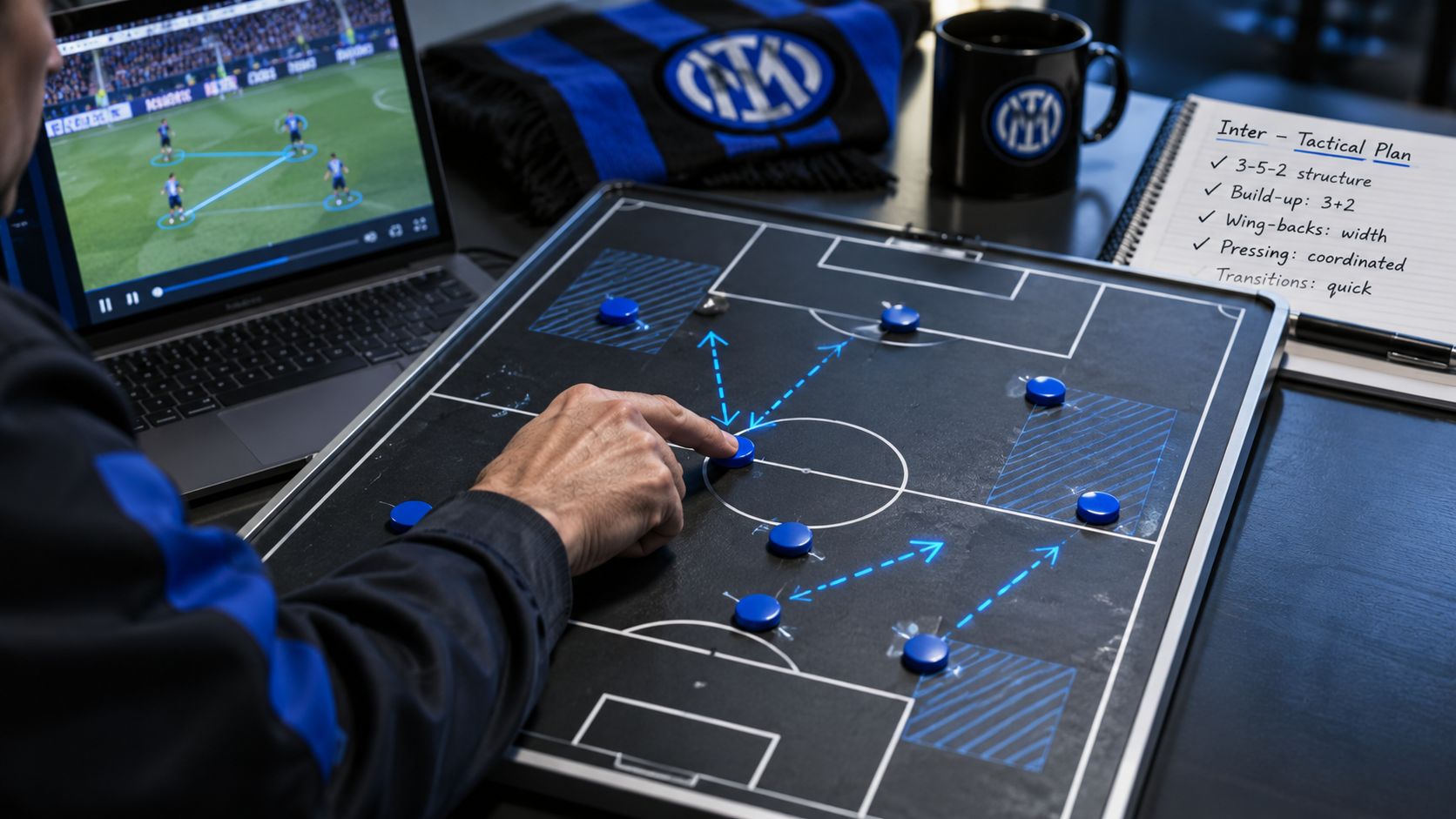
A formation graphic is a useful starting point, but it cannot tell you exactly how a football team plays. A side listed as 3-5-2 can resemble a five-man defence without the ball and a more aggressive attacking structure when possession changes.
For Inter supporters, understanding these shifts makes matches much more enjoyable. This beginner-friendly guide explains what to watch before making claims about the team's current tactical identity.
Start with the phase of play
Separate four phases: organised possession, organised defending, attacking transitions and defensive transitions. A team's shape can change in each phase.
When Inter are building from deep, count who stays near the centre-backs, which midfielder offers a short passing option and whether players position themselves between opposition lines. When defending, look for the height of the wide players and how narrow the midfield becomes.
What does a wing-back actually do?
Wing-backs combine defensive and attacking responsibilities. They may stretch the pitch near the touchline, arrive at the far post, or retreat to create a back five. Their decisions depend on the ball position, the opponent and the manager's plan.
A useful question is not simply “Did the wing-back attack?” but “What space opened because the wing-back moved?” An advanced wide run can pull a defender outward and create a passing lane for a striker or central midfielder.
Understand the midfield triangle
Midfielders often divide tasks between receiving the ball from defence, supporting combinations and running beyond forwards. A deeper playmaker sets the rhythm, while more advanced teammates may press, cover space and join attacks.
Watch the distances between those roles. When teammates stay too far apart, simple passing options disappear. When they move in coordination, a team can advance without needing constant dribbles.
Pressing is more than running hard
A good press is organised. One player approaches the ball while teammates block the easiest passing lanes. A team may press aggressively near the opposition box or sit deeper and seek counter-attacking space. Neither approach is automatically superior.
To assess Inter's pressing, watch what triggers movement: a backward pass, a poor first touch, a pass toward the touchline or a specific opponent receiving with their back to goal.
A five-minute match-analysis checklist
At the start of each half, note the shape with and without the ball. Follow the same midfield player for two minutes. Then track where turnovers happen and whether Inter immediately recover their defensive positions. Finally, observe which tactical problems substitutions are intended to solve.
Avoid assumptions from old seasons
Tactical roles change with coaches and personnel. Historic descriptions of Inter's system should not be presented as current facts without watching the relevant match or consulting verified data. This article provides an analysis method, not a claim about one specific November 2026 starting lineup.
**Related reading to add:** Inter Match Reports; How to Understand a 3-5-2 Formation.
Sources
Nerazzurri Pulse is an independent fan publication and is not associated with FC Internazionale Milano.