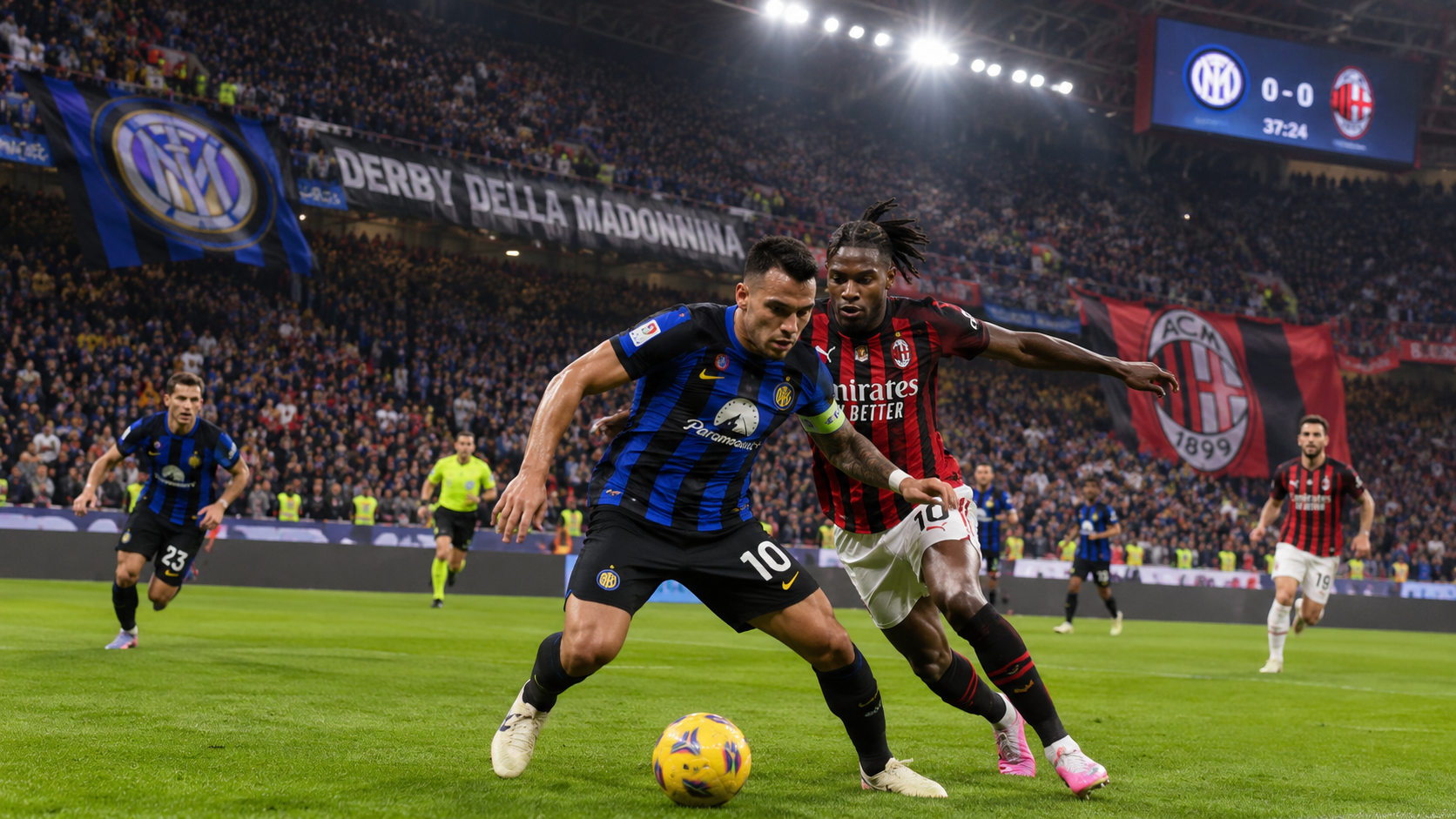
Explore Inter vs AC Milan: why it is called the Derby della Madonnina, how the rivalry began and what makes the Milan derby special.
What is the Derby della Madonnina?
The Derby della Madonnina is the Milan city derby between Inter and AC Milan. Unlike rivalries between clubs in different cities, this one unfolds within the same city and, for decades, largely within the same stadium. Households, workplaces and friendship groups can be divided into black-and-blue and red-and-black. That closeness is central to the match's appeal: a derby result stays part of everyday conversations long after the final whistle.
Why is it called the Madonnina derby?
The name comes from the Madonnina, the golden statue of the Virgin Mary on top of Milan's Duomo cathedral. The monument is a recognizable symbol of the city. Naming the football rivalry after it connects the game to Milan itself rather than to a sponsor, competition or particular stadium. Supporters can change generations and stadium plans can change, but the rivalry's name continues to point back to the city's identity.
When did Inter and AC Milan first meet?
Inter were founded in March 1908. The clubs' first derby took place later that year in Chiasso, Switzerland, with AC Milan winning 2–1. The first official competitive meeting followed on 10 January 1909. This is a useful distinction when you see different “first derby” dates quoted: some historical accounts refer to the initial friendly meeting and others to the first competitive fixture. Both are part of the rivalry's early story.
Two clubs, different identities
AC Milan were already established when Inter emerged in 1908. Inter's founders wanted an international outlook, reflected in the club's full name, Internazionale. The contrast between Inter's black and blue and Milan's red and black made the dividing line instantly visible. The clubs have evolved considerably since then, so it would be simplistic to reduce today's rivalry to a single class or political divide. What survives is the competition for local bragging rights, major trophies and the right to define an era of Milanese football.
What makes the derby different from a regular Serie A match?
The fixture carries three overlapping stories. There is the immediate league or cup context, which can be decisive on its own. There is the local contest for a city's attention. And there is the history of celebrated players, decisive goals and major European nights. The derby can affect a title race, but even when the standings are less dramatic, it is rarely treated as an ordinary league date. For visiting supporters, it also means ticket demand and travel planning need extra attention.
How to follow the next derby responsibly
Check Inter's official ticket page and the clubs' fixture announcements for the confirmed date and entry details. Kickoff times can move for television, European competitions or authorities' decisions. Avoid relying on an older derby guide for the latest timetable, ticket restrictions or stadium access. A good fan guide should preserve history while updating match-specific details each time the teams meet.
Sources and further reading
Independent fan publication. Not affiliated with or endorsed by FC Internazionale Milano. Last fact-check: 7 November 2026. Matchday arrangements and ticket rules can change.
Nerazzurri Pulse is an independent fan publication and is not associated with FC Internazionale Milano.